
Course Rating Vs Slope
Course Rating Vs Slope - The main difference is that the course rating measures the difficulty for a scratch player, while. The course rating and slope. To put it simply, the larger the difference is between the course rating and the bogey rating, the higher the slope rating will be. If par for a course is 72, it's course rating might be 71.4. Course rating indicates the difficulty of a course for a “par” or scratch. Course rating measures the difficulty of a course for a scratch golfer, while slope rating measures the difficulty of a course for a bogey golfer. The simple answer is, a course rating is a number that indicates what a scratch golfer (a golfer that averages par for a round) should shoot on this particular course. The course rating is a number, close to par for the course, and is expressed with a single decimal digit. These numbers are vital in assessing the difficulty of a golf. Both ratings are used to. With a course rating of 71.0. A course rating and slope rating can be issued to golf courses with a minimum length of 750 yards (685 metres) for 9 holes and 1500 yards (1370 metres) for 18 holes. Usga course rating tells the best golfers how hard a golf course actually plays; Both ratings are used to. How course and slope ratings affect your. These ratings help gauge the level of difficulty and give. To put it simply, the larger the difference is between the course rating and the bogey rating, the higher the slope rating will be. Course rating measures the difficulty of a course for a scratch golfer, while slope rating measures the difficulty of a course for a bogey golfer. The simple answer is, a course rating is a number that indicates what a scratch golfer (a golfer that averages par for a round) should shoot on this particular course. To put it simply, the larger the difference is between the course rating and the bogey rating, the higher the slope rating will be. Both ratings are used to. These numbers are vital in assessing the difficulty of a golf. Many golfers are familiar with the terms course rating and slope, but don’t really know what they mean. Course rating measures the difficulty of a course for a scratch golfer, while slope rating measures the difficulty of a course for a bogey golfer. The. Both ratings are used to. Usga slope rating indicates how much harder the course plays for regular (meaning. Understanding the distinction between course rating and slope rating is crucial for all golfers: With a course rating of 71.0. These numbers are vital in assessing the difficulty of a golf. Usga slope rating indicates how much harder the course plays for regular (meaning. With a course rating of 71.0. These ratings help gauge the level of difficulty and give. Both ratings are used to. A course rating and slope rating can be issued to golf courses with a minimum length of 750 yards (685 metres) for 9 holes and 1500. The simple answer is, a course rating is a number that indicates what a scratch golfer (a golfer that averages par for a round) should shoot on this particular course. Understanding the distinction between course rating and slope rating is crucial for all golfers: The main difference is that the course rating measures the difficulty for a scratch player, while.. The main difference is that the course rating measures the difficulty for a scratch player, while. Both ratings are used to. So what is a course rating anyways? Two numbers—course rating and slope rating—are critical to understanding the challenge each course presents. To put it simply, the larger the difference is between the course rating and the bogey rating, the. Course rating measures the difficulty of a course for a scratch golfer, while slope rating measures the difficulty of a course for a bogey golfer. To put it simply, the larger the difference is between the course rating and the bogey rating, the higher the slope rating will be. To put it another way: These ratings help gauge the level. Understanding the distinction between course rating and slope rating is crucial for all golfers: If par for a course is 72, it's course rating might be 71.4. Many golfers are familiar with the terms course rating and slope, but don’t really know what they mean. The course rating and slope. Course rating measures difficulty for scratch golfers (expected score), while. Slope rating and course rating are designed to measure the difficulty of the course. So, while the par for a particular course might be 72, a course rating of 70.1 would indicate that a scratch golfer should. So what is a course rating anyways? To put it simply, the larger the difference is between the course rating and the bogey. How course and slope ratings affect your. The main difference is that the course rating measures the difficulty for a scratch player, while. The course rating and slope. The course rating is a number, close to par for the course, and is expressed with a single decimal digit. Both ratings are used to. So, while the par for a particular course might be 72, a course rating of 70.1 would indicate that a scratch golfer should. If par for a course is 72, it's course rating might be 71.4. To put it simply, the larger the difference is between the course rating and the bogey rating, the higher the slope rating will be.. Understanding the distinction between course rating and slope rating is crucial for all golfers: So, while the par for a particular course might be 72, a course rating of 70.1 would indicate that a scratch golfer should. How course and slope ratings affect your. To put it simply, the larger the difference is between the course rating and the bogey rating, the higher the slope rating will be. The simple answer is, a course rating is a number that indicates what a scratch golfer (a golfer that averages par for a round) should shoot on this particular course. Course rating measures difficulty for scratch golfers (expected score), while slope rating shows how. If par for a course is 72, it's course rating might be 71.4. When it comes to calculating your golf handicap, two essential factors come into play: The course rating and slope. Course rating indicates the difficulty of a course for a “par” or scratch. What is the difference between course rating and slope rating? To put it another way: Slope rating and course rating are designed to measure the difficulty of the course. Course rating measures the difficulty of a course for a scratch golfer, while slope rating measures the difficulty of a course for a bogey golfer. Usga course rating tells the best golfers how hard a golf course actually plays; The main difference is that the course rating measures the difficulty for a scratch player, while.
Course & Slope Rating Peterhead Golf Club
![The 1 Free Golf Handicap Calculator Tool [Easy to Use]](https://i0.wp.com/hittingthegolfball.com/wp-content/uploads/2022/04/usga-course-rating-and-slope-rating-example-1024x682.png?resize=768%2C512&ssl=1)
The 1 Free Golf Handicap Calculator Tool [Easy to Use]

What is Course Rating? And How is it Determined? The Michigan Golf
Understanding Golf Course Rating And Slope A Beginner's Guide
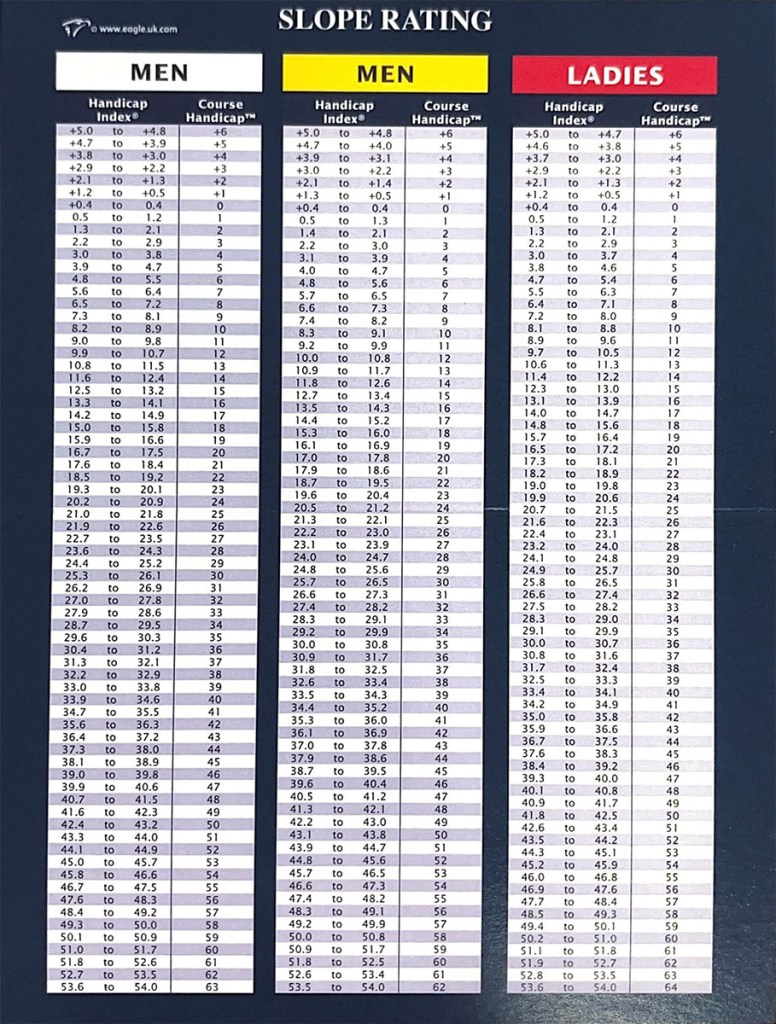
Slope Ratings Stranraer Golf Club

The Key Differences Between Golf Course Rating and Slope Golf Courses

Course And Slope Rating Explained What You Need To Know! My Golf Heaven

What is a Golf Course Slope Rating? • Honest Golfers
Demystifying Golf Course Ratings and Slope Unlocking the Secrets of
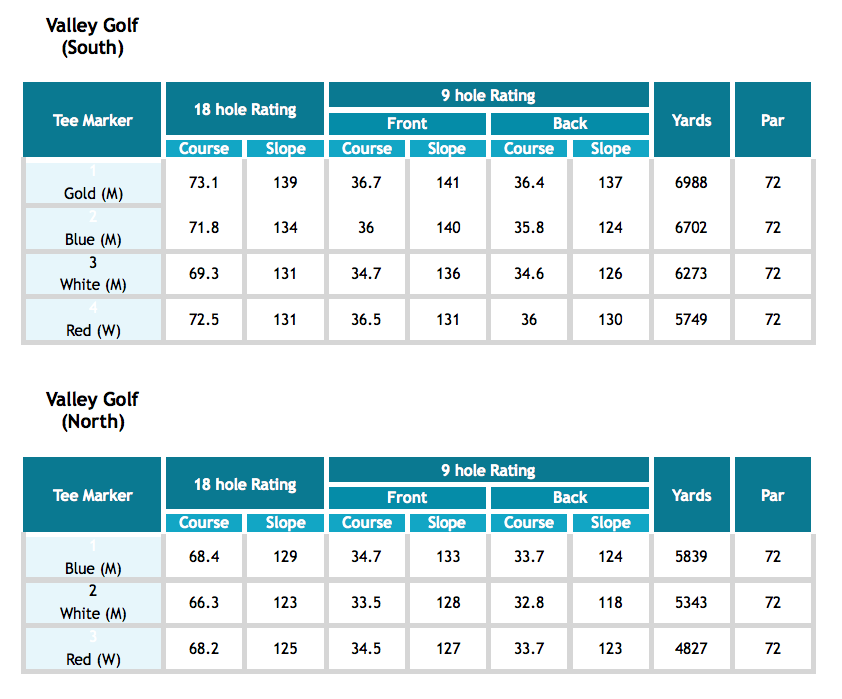
Slope Rating / Course Rating Valley Golf and Country Club, Inc
To Put It Simply, The Larger The Difference Is Between The Course Rating And The Bogey Rating, The Higher The Slope Rating Will Be.
These Numbers Are Vital In Assessing The Difficulty Of A Golf.
Two Numbers—Course Rating And Slope Rating—Are Critical To Understanding The Challenge Each Course Presents.
The Course Rating Is A Number, Close To Par For The Course, And Is Expressed With A Single Decimal Digit.
Related Post: